What it is
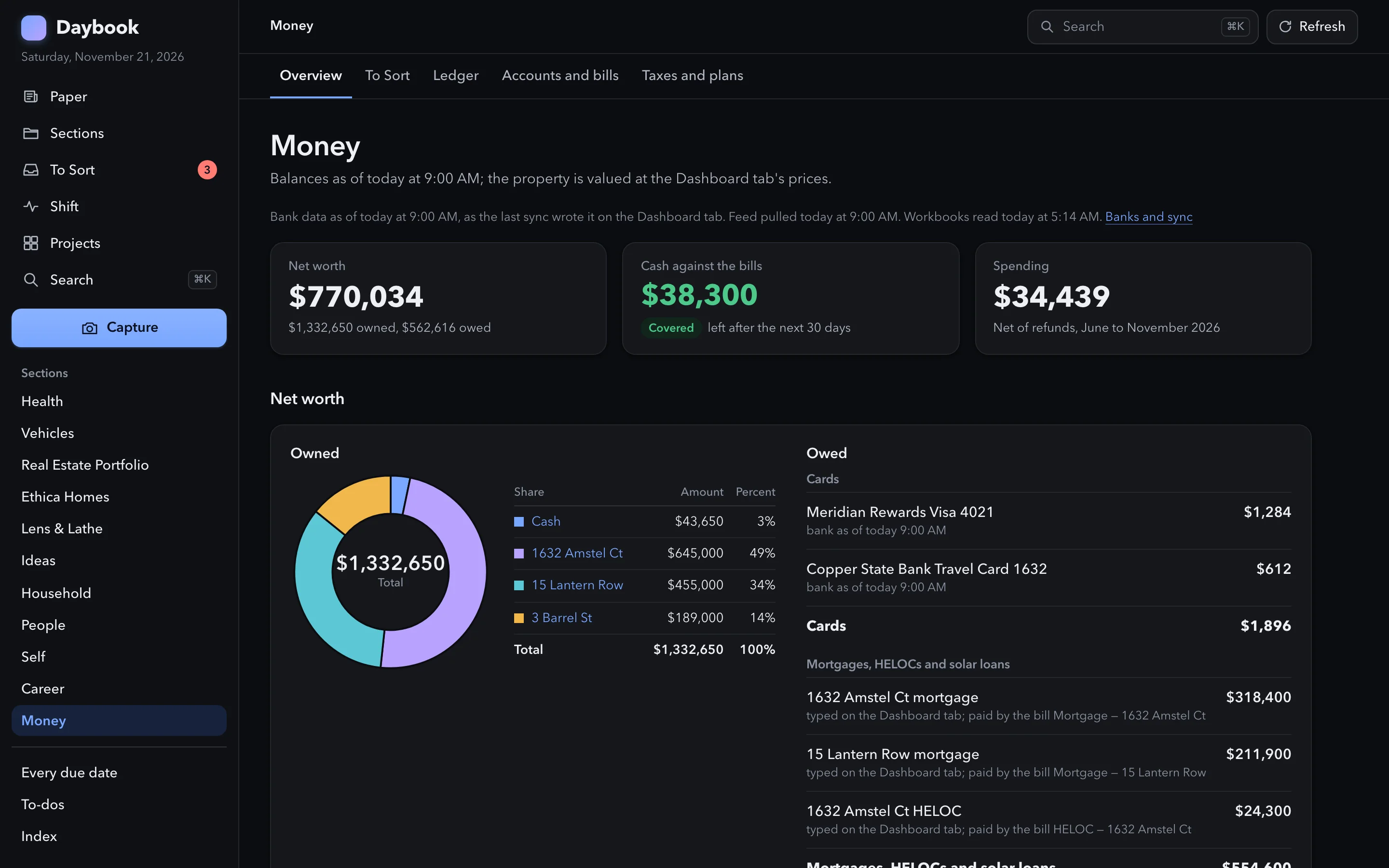
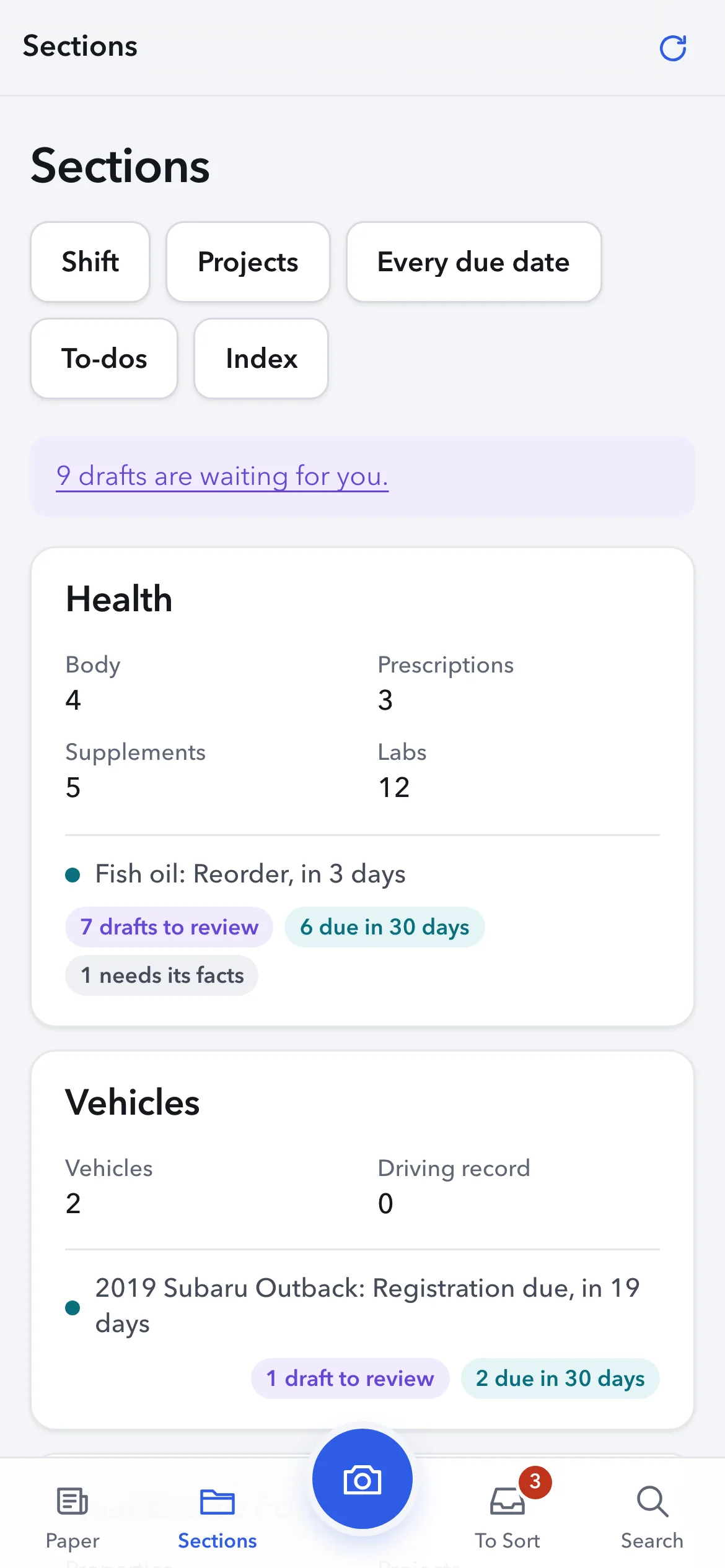
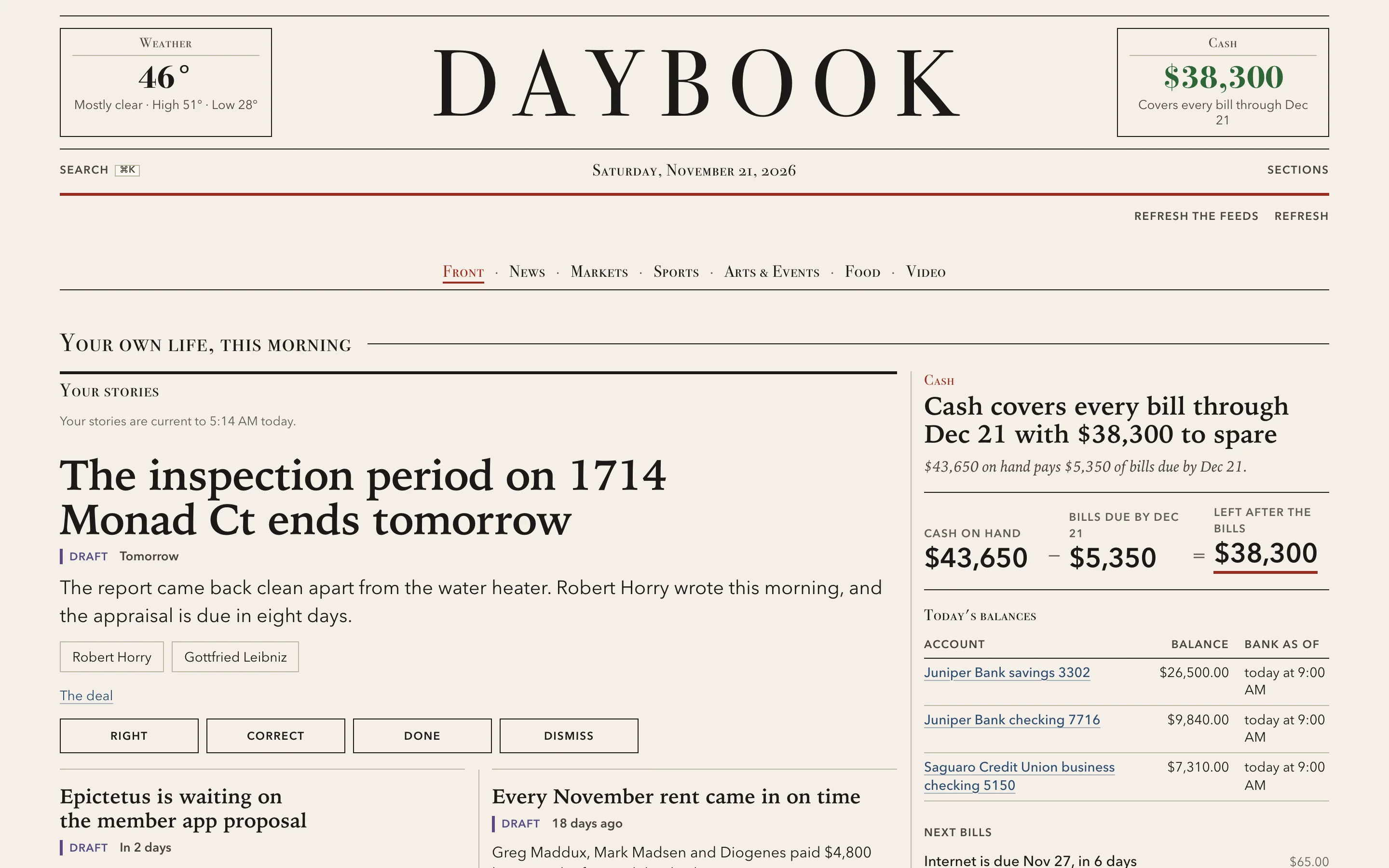
Daybook turns the folders a person already keeps into sections, things and documents. A section is a folder (Health, Vehicles, a business), a thing is a subfolder (a car, a property, a prescription) and a document is a file. Money comes from a live bank feed through Plaid; every due date across every section lands on one list; and a Shift page shows the studio's AI work as it runs.
The problem
Personal records live in a bank's app, a drive full of PDFs, a calendar and a to-do list, and none of them knows what the others hold. Finding out what needs attention this week means opening all of them.
Decisions
The documents stay the record.
The app reads the folders and files where they already live and keeps only a cache it can rebuild, so nothing important exists only on the server.
Phone first, and locked down.
It is a home-screen web app built for a phone, served from a computer at home behind a sign-in gateway, its own password and two-factor codes, with no open ports.
Drafts before facts.
Anything the app proposes from a document or a bank row (a category, a due date, a new record) arrives as a draft to accept or change, so a record never changes on a guess.
What Brian designed and built
Brian designed the information architecture, the screens and the security model, and built the app with Claude Code, including the move of the bank feed onto the home server and the test gate that runs before every deploy.
Where it stands
Brian runs his own records from it. It is being prepared for release as open source, so anyone can host their own; the screens here use test data.